Elevator Inverters: Diagnosis, Repair & Service (KONE, Otis, Macpuarsa)
Files to download
A practical guide to diagnosing, repairing, and servicing elevator inverters – from KONE, Otis, and Macpuarsa to other leading elevator control system brands.
Elevator Inverters: Professional Diagnosis, Repair, and Service (KONE, Otis, Macpuarsa)
Elevator inverters are key components in elevator systems, responsible for controlling motor speed and acceleration. These devices, also known as variable frequency drives (VFD/VVVF), shape the acceleration and deceleration profile, ensuring a smooth and comfortable ride. The market includes elevator inverters and controllers from many manufacturers – from global brands such as KONE (V3F series), Otis (Otis GEN2), Schindler, and ThyssenKrupp Elevator, to specialized elevator component suppliers such as the Spanish manufacturer Macpuarsa (V3FMAC series), the German company Wittur, or Vacon (Danfoss). In this article we use examples from several of these systems – primarily KONE V3F, Otis GEN2, and Macpuarsa – to illustrate general principles of diagnosis, repair, and service that largely apply to other manufacturers as well.
Elevator Inverters and Controllers – Overview of Manufacturers on the Market
The market for elevator parts is highly diverse when it comes to inverter, main controller, and door control module manufacturers. Among the brands most commonly found in serviced installations – both in new and older elevators – are:
- KONE – V3F series inverters
- Otis – GEN2 control systems with TCB/GECB/MCB3X modules
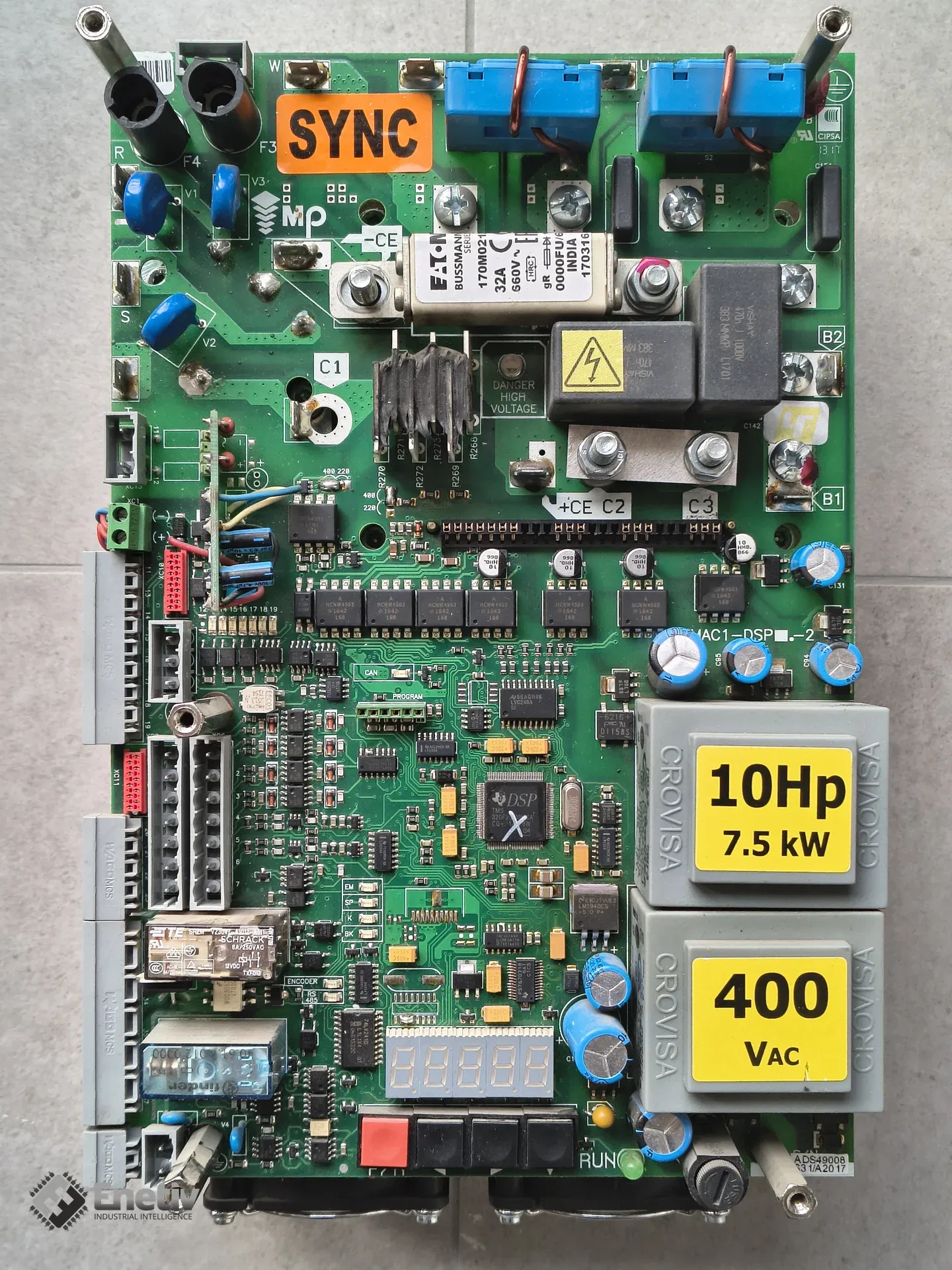
- Macpuarsa (Spain) – V3FMAC series inverters, along with door controllers (e.g. the 2102VSOPER00 module) and PCB boards (e.g. the VS Master 2102VSMST000)
- Schindler
- ThyssenKrupp Elevator (TK Elevator)
- Orona
- Wittur (Germany)
- Vacon (Danfoss)
- Fermator and Prisma
- and smaller, specialized elevator component manufacturers such as Sodimas, Slycma, Techwind, Mikrolift, Metron, Micontrol, Sprinte, New Lift, Vimec Lift, and Qma Electric.
Regardless of brand, the principles of diagnosis, maintenance, and the "repair or replace" decision remain similar – they mainly differ in service tools and parameter naming.
Why Are Elevator Inverters So Important?
Elevator inverters are essential for ensuring smooth and safe elevator movement. They control motor speed and acceleration, allowing for optimal performance and minimized energy consumption. In addition, elevator inverters are equipped with advanced safety features, such as protection against overload and faults. Modern inverters, such as the KONE V3F, Otis GEN2, or Macpuarsa V3FMAC, provide a better acceleration and deceleration profile, faster floor-to-floor travel times, and precise leveling accuracy – each manufacturer achieves this through somewhat different methods, but the goal remains the same.
What Are the Most Common Elevator Inverter Failures?
The most common elevator inverter failures – regardless of whether we're talking about KONE, Otis, Macpuarsa, Schindler, or ThyssenKrupp – include:
- Overload and motor failures – resulting from excessive load or an incorrect acceleration profile.
- Control system damage – related to communication issues or damaged control electronics.
- Power supply failures – caused by power issues or damaged power modules.
- Communication problems between system components – resulting from data transmission errors or damaged communication interfaces.
Elevator Inverter Diagnostic Procedures
How to Diagnose an Elevator Inverter (Using Otis Systems as an Example)
Diagnosing an elevator inverter should be carried out by a qualified technician with the appropriate tools and knowledge. The diagnostic procedure for Otis systems includes the following steps:
- Accessing the control system – use the Otis GEN2 Service Tool to access the controller via the TCB or GECB menu. Check the CAN-bus connection via the MCB3X module.
- Accessing the inverter – access the inverter via the MCB or GDCB menu of the service tool.
- Monitoring statuses and messages – use the service tool to monitor software states, system inputs and outputs, and system messages.
- Checking operating parameters – analyze motor and inverter operating parameters, including speed, acceleration, load, and temperature.
- Analyzing communication between system components – verify the integrity of communication between the controller, the inverter, and other system components.
- Verifying technical condition – check the wear condition of components, capacitors, power modules, and communication interfaces.
Diagnosing Macpuarsa Inverters
Installations based on Macpuarsa components typically include V3FMAC series inverters and related control modules, such as the 2102VSOPER00 door controller or the VS Master 2102VSMST000 main board. Diagnosing these components follows a process similar to other systems: it involves checking the correctness of power supply and connections, reading motor operating parameters, and verifying the condition of capacitors and power components, and – in the case of door system faults – checking communication between the door controller and the main board. Because Macpuarsa specializes in elevator components (rather than complete elevators), spare parts and replacement modules for its inverters are relatively well available on the secondary market.
Diagnostics in Other Systems
Manufacturers such as Schindler, ThyssenKrupp Elevator, Orona, and Wittur offer their own proprietary service tools and technical documentation, usually available only to authorized service technicians. The general approach, however, remains similar to the one described above: accessing the controller and inverter via dedicated software, reading error codes and operating parameters, and then analyzing communication between system modules.
Hierarchical Diagnostic Menu Structure
Service tools such as the Otis Service Tool use a hierarchical menu structure with SYSTEM, TOOL, and EXTRA paths. The TOOL path contains functions supporting installation and maintenance, including the Maintenance menu for handling the preventive replacement of spare parts. A similar, layered menu structure (diagnostics – parameters – maintenance) is also found in the service tools of other manufacturers, although the naming of individual levels may vary.
Is It Worth Repairing an Elevator Inverter, or Better to Replace It?
The decision to repair or replace an elevator inverter depends on several factors:
- Extent of the failure – if the fault is localized (e.g. a damaged capacitor or communication module), component-level repair can be cost-effective.
- Repair costs – compare repair costs to the price of a new inverter. If repair costs exceed 60–70% of the price of a new unit, replacement may be more economical.
- Availability of spare parts – for older models, such as the KONE V3F10 or earlier versions of the Macpuarsa V3FMAC, spare parts availability may be limited, which affects the replacement decision. For brands such as Schindler or ThyssenKrupp, the availability of original parts can also depend on the network of authorized suppliers.
- Downtime – on-site repair can be faster than replacement if spare parts and specialized tools are available.
Pros and Cons of Repairing an Elevator Inverter
Advantages of repairing an elevator inverter:
- The ability to retain original parts and system configuration.
- Lower costs compared to a full replacement.
- Shorter repair time when spare parts are available.
- The ability to preventively replace components, such as capacitors, before a complete failure.
Disadvantages of repairing an elevator inverter:
- Possible recurring failures if the root cause is not correctly identified.
- The need for specialized tools and technical knowledge, often different for each brand (KONE, Otis, Macpuarsa, Schindler, ThyssenKrupp).
- Limited availability of spare parts for older models.
- Risk of damaging other components during the repair.
Preventive Maintenance Activities
To prevent elevator inverter failures, the following maintenance activities should be carried out regularly:
- Checking operating parameters – regularly monitor motor and inverter operating parameters, including speed, acceleration, load, and temperature. Use brand-specific service tools, such as the Otis Service Tool or diagnostic software dedicated to Macpuarsa inverters.
- Cleaning and lubricating components – keep the inverter and surrounding components clean to prevent dust and debris buildup. Regularly lubricate moving parts according to manufacturer recommendations.
- Verifying technical condition and component wear – check the condition of capacitors, power modules, communication interfaces, and other components. Replace components showing signs of wear before a complete failure occurs.
- Preventive replacement of spare parts – in line with the Maintenance menu available in Otis service tools (similar preventive schedules are also recommended by KONE, Macpuarsa, Schindler, and other manufacturers), carry out preventive replacement of spare parts at set intervals.
- Monitoring system communication – regularly check the integrity of communication between the controller, the inverter, and other system components, particularly the CAN-bus connections in Otis systems and analogous communication buses in other manufacturers' systems.
Environmental and Operational Factors Affecting Elevator Inverter Durability
The durability of elevator inverters depends on various environmental and operational factors:
- Temperature – high temperatures accelerate the aging of electrolytic capacitors and can lead to degradation of IGBT modules. Keep the ambient temperature within the recommended range and ensure adequate ventilation.
- Humidity – high humidity can lead to corrosion of electronic components and insulation problems. Ensure adequate ventilation and dehumidification in machine rooms.
- Dust and contamination – dust buildup on electronic components can lead to overheating and short circuits. Regularly clean the inverter and surrounding components.
- Vibration – vibration can lead to loosened connections and damage to electronic components. Ensure proper mounting of the inverter and regularly check connections.
- Load and operating profile – KONE V3F inverters are designed for various operating profiles, from 0.63 m/s to 4 m/s. Similar principles for matching the operating profile to load and elevator speed also apply to Macpuarsa V3FMAC inverters and other manufacturers' systems – it is always worth verifying the configuration according to the given brand's documentation.
FAQ
What Is an Elevator Inverter?
An elevator inverter is a device that controls the speed and acceleration of motors in elevator systems. Variable frequency drives (VFDs), such as the KONE V3F, Otis GEN2, or Macpuarsa V3FMAC, shape the acceleration and deceleration profile, ensuring a smooth ride, better floor-to-floor travel times, and precise leveling accuracy.
Which Elevator Inverter and Controller Brands Are Most Commonly Found?
The market most commonly features inverters and controllers from brands such as KONE, Otis, Schindler, ThyssenKrupp Elevator, Macpuarsa, Orona, and Wittur, as well as solutions from smaller, specialized elevator component manufacturers. Choosing the right service provider depends on whether they have the diagnostic tools and spare parts for the specific brand – for example, the Macpuarsa V3FMAC requires a different service approach than the Otis GEN2 or KONE V3F.
What Are the Most Common Elevator Inverter Failures?
The most common elevator inverter failures are overload and motor failures, control system damage, power supply failures, and communication problems between system components. Failures can result from high temperatures, humidity, dust buildup, vibration, or incorrect system configuration – regardless of the inverter brand.
Is It Worth Repairing an Elevator Inverter, or Better to Replace It?
The decision to repair or replace an elevator inverter depends on the extent of the failure, repair costs, and spare parts availability. If repair costs exceed 60–70% of the price of a new unit, replacement may be more economical. For localized failures, such as a damaged capacitor, component-level repair can be cost-effective – this applies to both KONE and Otis inverters, as well as the Macpuarsa V3FMAC.
What Are the Pros and Cons of Repairing an Elevator Inverter?
The advantages of repairing an elevator inverter include the ability to retain original parts, lower costs compared to replacement, shorter repair time, and the ability to preventively replace components. The disadvantages include possible recurring failures, the need for specialized tools and brand-specific knowledge, limited spare parts availability for older models, and the risk of damaging other components.
What Are the Preventive Maintenance Activities?
To prevent elevator inverter failures, motor and inverter operating parameters should be regularly checked, components should be cleaned and lubricated, technical condition and component wear should be verified, spare parts should be preventively replaced at set intervals, and system communication integrity should be monitored. It is worth using brand-specific, dedicated service tools for this purpose – such as the Otis Service Tool or diagnostic software for Macpuarsa inverters – which allow the system's condition to be tracked on an ongoing basis and signs of an impending failure to be detected early.
Sources
(Note: the following are the original Polish-language sources used for this article.)
- Naprawa i serwis falowników | Omega Electronics
- Naprawa i serwis falowników - Elektronika i Automatyka plus
- Serwis i naprawa falowników - Elfago
- Serwis i naprawy falowników VACON, VLT, Danfoss - neisa
- Sterownik drzwi MacPuarsa 2102VSOPER00 - Sklep Global-Lift
- Falownik V3FMAC 7,5Kw MACPUARSA - NAPRAWA - eLiftMarket