Motor-to-Machine Coupling: Shaft Alignment and Start-Up with a VFD or Soft Starter
Files to download
After a motor is replaced, the machine often behaves differently: the coupling knocks, the bearings heat up faster and the gearbox takes a jerk at every start. Learn what to check on the coupling, shaft alignment and start-up with a soft starter or frequency inverter (Siemens, ABB, Danfoss).
Coupling and controlling an electric motor with a machine: coupling, shaft alignment and starting with a frequency inverter or soft starter - what to watch out for when replacing (Siemens, ABB, Danfoss)
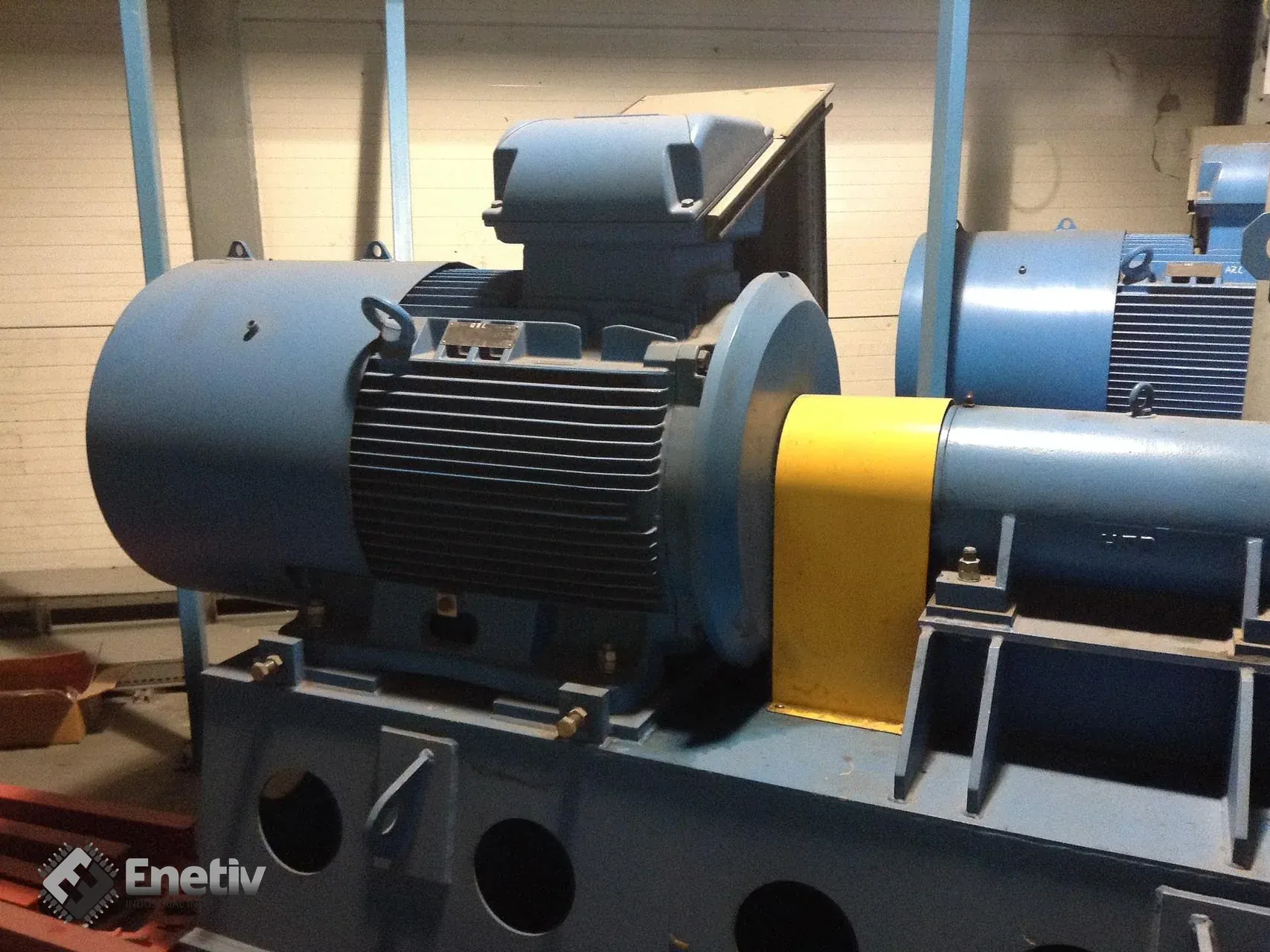
After a motor is replaced, the machine often behaves differently than before: the coupling knocks, the bearings heat up faster, and the gearbox takes a jerk at every start. An electric motor drives a pump, fan, conveyor or compressor through a coupling. Whether the start is direct-on-line, through a soft starter or through a frequency inverter determines the load on the gearbox, the bearings and the coupling itself. Replacing the motor or the starting system often exposes problems that were not visible before, for example a worn key, play on the shaft or a distorted motor foot.
In this article we have collected what a technician should check at the coupling, at the shaft alignment and when choosing the start method. Always take limit values from the documentation of the specific motor, coupling and machine.
How the start method loads the coupling, gearbox and bearings
Direct-on-line start is the simplest, but it gives the biggest jerk in the whole drive train. Danfoss lists motor bearing wear, gearbox wear and hydraulic shocks (so-called water hammer) in pump installations among the drawbacks of direct-on-line start. A soft starter and a frequency inverter let the motor accelerate more gently, which relieves the coupling and the rest of the drive.
Siemens describes the benefits of SIRIUS 3RW soft starters: reduced mechanical load on the driven machine and reduced current peaks. At the coupling this means fewer torque shocks at every start. The difference between the solutions is, however, important for selection. A soft starter limits current and torque by raising the voltage, but it does not change the frequency. Danfoss stresses that a soft starter does not change the frequency. A frequency inverter gives fuller control of speed and torque over the whole operating range.
Coupling, alignment and motor mounting
Good alignment starts with an inspection. Before mounting the new motor, look over the coupling and the shaft ends: look for play, cracks, signs of wear and a damaged keyway. Also check the motor foot and the shims under it. An uneven or distorted base ruins the alignment even when the shafts were set up carefully.
Check the shaft alignment with dial indicators or a laser, before and after the replacement, and repeat the measurement after tightening the mounting bolts. Take the permissible deviations from the documentation of the coupling and the machine.
The ABB manual for low voltage motors contains two remarks about parts fitted on the shaft. First, the motor is balanced as standard with a half key, which must be taken into account when fitting a coupling half or a pulley. Second, with a belt drive the belts must be tensioned according to the instructions of the supplier of the driven equipment, without exceeding the maximum belt forces (that is, the radial load on the bearings) given in the product catalogues.
Manufacturers' approach to soft starter starting
Below is a summary of what each manufacturer's documentation says about selection and starting. The soft starters of different manufacturers are not presented here as interchangeable, and settings must not be carried over uncritically from one device to another.
ABB describes selection rules in its soft starter compendium. For a normal start, the soft starter is selected for the rated power of the motor, and for a heavy-duty start a unit one size larger is chosen. During a start with a soft starter the current is 3 to 4 times the rated current of the motor. When the number of starts exceeds 10 per hour, ABB says to choose a soft starter one size larger.
Siemens notes in its catalog that the selection of a soft starter depends on the rated current of the motor, and recommends the Win-Soft Starter selection and simulation program. SIRIUS 3RW30 soft starters are intended for easy starting conditions, and for other conditions or a higher switching frequency a larger device may be needed. The 3RW40 has built-in electronic motor overload protection and an adjustable current limit.
Danfoss indicates that the rated current of a soft starter depends on the number of starts per hour, the duration and current level of each start, and the time between starts. The selected soft starter should have a rated current at least equal to the motor full-load current read from the rating plate. For the MCD 600 the manufacturer gives an example from the AC-53b class: maximum start current 4 × FLC (42 A), 6 s start and a minimum of 354 s between starts.
| Parameter | ABB soft starter | Siemens SIRIUS 3RW40 | Danfoss MCD 600 |
|---|---|---|---|
| Selection rule | with more than 10 starts per hour, choose a soft starter one size larger | soft starter selection depends on the rated current of the motor | rated current of the soft starter at least equal to the motor full-load current |
| Selection tool | - | Win-Soft Starter selection and simulation program | - |
| Start current with a soft starter | during the start the current is 3 to 4 times the rated current of the motor | - | - |
| Maximum start current (AC-53b example) | - | - | 4 × FLC (42 A) |
| Start time and time between starts (AC-53b example) | - | - | 6 s start, min. 354 s between starts |
| Rated voltage | - | versions 200 ... 480 V and 400 ... 600 V | 200-690 V AC |
| Current range | - | - | 20-1,250 A |
| Basic settings (belt conveyor) | initial voltage 40%, ramp-up time 10 s, current limit 4 * Ie | - | - |
Example starting settings and device ranges
The starting settings are only a starting point and must be refined during commissioning. ABB gives recommended basic settings for a belt conveyor: ramp-up time 10 s, ramp-down time 0 s (10 s for delicate material), initial voltage 40% and current limit 4 * Ie. For a fan the recommended initial voltage is 30%, ramp-up time 10 s and current limit 4 * Ie. A fan usually has a large flywheel and needs a heavy-duty start, so ABB says to choose a soft starter one size larger than the kW rating of the motor. In such installations, stepless voltage reduction during stopping must never be used.
Siemens gives example values in its catalog for a normal start (class 10). The initial voltage is 70% for a belt conveyor, 60% for a roller conveyor, 50% for a compressor, and 40% each for a small fan, a pump and a hydraulic pump. The start times are 10 s, 10 s, 20 s, 20 s, 10 s and 10 s respectively. The manufacturer notes that the values are for information only, are not binding and must be optimized during commissioning, and that the actual start times depend on the load.
The ranges of Siemens devices differ clearly. The 3RW30 is rated up to 75 Hp (at 460 V) with a rated current at 50 °C in the range 3...98 A, and the 3RW40 up to 300 Hp (at 460 V) with a rated current at 50 °C in the range 11...385 A. The 3RW44 handles up to 900 Hp in the in-line arrangement and up to 1600 Hp in the inside-delta arrangement. For the 3RW30 and 3RW40 the initial voltage is adjustable in the range 40...100%, and for the 3RW44 in the range 20...100%. Only the 3RW44 has a torque limit of 20...200%.
Connecting the motor to a soft starter and a frequency inverter
Before ordering a soft starter, check how the motor is connected and how it is accessible in the terminal box. According to the ABB manual, the terminal box of standard single-speed motors usually contains six winding terminals and at least one earthing terminal, which allows direct-on-line or star-delta starting. With direct-on-line starting, either a star or a delta connection can be used. With a delta connection the supply voltage must equal the rated voltage of the motor, and for star-delta starting all the links must be removed from the terminal block.
Connecting the soft starter inside the delta circuit changes the current load. ABB states that the soft starter then carries only 58% (1/√3) of the in-line connection current.
What to watch out for when replacing
The points below come from the manufacturers' documentation and from general maintenance practice. Each concerns a different place in the system, so check them before ordering parts and before commissioning.
- ABB - many starts per hour: with more than 10 starts per hour, choose a soft starter one size larger. Count the starts before you choose the size, because a soft starter that is too small will overheat.
- Siemens - selection: the soft starter is selected according to the rated current of the motor, and the manufacturer recommends the Win-Soft Starter program. Read the current from the rating plate of the new motor, not from the old one.
- ABB - higher ambient temperature: a soft starter can work at a higher temperature if the rated current is reduced proportionally according to the manufacturer's recommendations. For ABB soft starters a derating of 0.8% per °C above 40°C is given, so check the temperature in the switchgear cabinet.
- ABB - main contactor: if the start signal is given to the main contactor and the soft starter at the same time, the device may signal a phase loss. Delay the start signal of the soft starter by about 0.5 s. ABB notes that the soft starter does not require a main contactor, but recommends one as an emergency switch or as a trip for the overload relay.
- ABB - test without a motor: a soft starter cannot be tested without a motor, because no current would flow through the device. Plan the test with the motor connected.
- ABB - mains voltage and load: the manufacturer guarantees full performance with a mains voltage tolerance of -15% and 10% of the rated value. ABB soft starters are intended for inductive loads only.
- Siemens 3RW30: this is a device for easy starting conditions. For different conditions or a higher switching frequency a larger device may be needed, and check the rated current at temperatures above 40 °C in the technical data.
- Danfoss - start frequency: the rated current of a soft starter depends on the number of starts per hour, the duration and level of the current, and the time between starts. Provide this data when selecting, not just the motor power.
- Coupling and shafts: inspect the coupling and the shafts for play, cracks, signs of wear and the condition of the key. Also check the motor foot and the shims.
- Alignment: check it before and after mounting with dial indicators or a laser, and measure again after tightening the bolts.
- Direction of rotation and rating plate: compare the power, current, voltage and star/delta connection with the data of the previous motor. Check the direction of rotation before coupling to the machine.
- Connectors and software: check the connectors and contacts and the software versions on the device labels.
- Used part: test it on a test bench and document its origin.
General replacement steps
Before dismantling, make a backup of the drive parameters and write down the data from the rating plate of the old motor. Then select the start method and the protection for the new data, instead of assuming that the old settings are enough. After removing the old motor, mount the new one with the coupling, align the shafts and tighten the mountings, then measure the alignment again.
Only then connect the cables. Run the system without load where permitted, and with a soft starter remember that a test without a motor is not possible. Then perform a test under load, check the communication and signals, and update the documentation with the new motor data, settings and measurement results.
Summary
First check the mechanics: the coupling, the key, the motor foot and the alignment. Then check the rating plate data, because the soft starter size depends on it. When ordering the starting system, count the starts per hour and take the ambient temperature into account. Plan the delay of the start signal with contactors and the test with the motor connected. Treat the settings from catalogs as a starting point, and choose the final values during commissioning.
Enetiv is a company from Żywiec, Poland, trading in industrial automation parts: PLC controllers, inverters, HMI panels and external devices. We offer new, used and refurbished parts from brands including Allen-Bradley (Rockwell Automation), Siemens, Schneider Electric, Bosch Rexroth and ABB, as well as other manufacturers available on the secondary market, at competitive prices and with discounts on top-brand products. We also specialize in end-of-life (EOL) parts and service, including older-generation and unusual components. If needed, we also help arrange an automation technician on site. Write to us via enetiv.com/kontakt and we will help you find a part or a replacement.